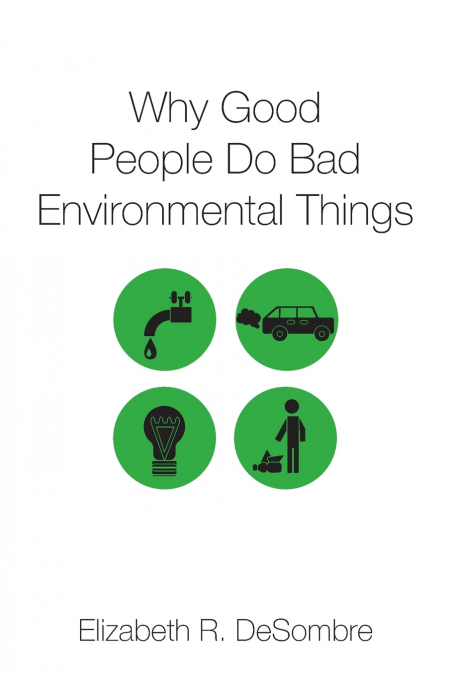
WHY GOOD PEOPLE DO BAD ENVIRONMENTAL THINGS
 POD

WHY GOOD PEOPLE DO BAD ENVIRONMENTAL THINGS

ELIZABETH R DESOMBRE

49,91 €
IVA incluido
Editorial:
OXFORD UNIVERSITY PRESS
Materia
Politica
ISBN:
9780197523803
49,91 €
IVA incluido
Añadir a favoritos

No one sets out to intentionally cause environmental problems. All things being equal, we are happy to protect environmental resources; in fact, we tend to prefer our air cleaner and our species protected. But despite not wanting to create environmental problems, we all do so regularly in the course of living our everyday lives. Why do we behave in ways that cause environmental harm?It is often easy and inexpensive to behave in ways with bad environmental consequences, but more difficult and costly to take environmentally friendly actions. The incentives we face, some created by the nature of environmental resources, some by social and political structures, often do not make environmentally beneficial behavior the most likely choice. Furthermore, our behavior is conditioned by habits and social norms that fail to take environmental protection into consideration.In this book, Elizabeth R. DeSombre integrates research from political science, sociology, psychology, and economics to understand why bad environmental behavior makes perfect sense. As she notes, there is little evidence that having more information about environmental problems or the way an individual's actions contribute to them changes behavior in meaningful ways, and lack of information is rarely the underlying cause that connects behavior to harm. In some cases such knowledge may even backfire, as people come to see themselves as powerless to address huge global problems and respond by pushing these issues out of their minds. The fact that causing environmental problems is never anyone's primary goal means that people are happy to stop causing them if the alternative behavior still accomplishes their underlying goals. If we can figure out why those problems are caused, when no one intends to cause them, we can develop strategies that work to shift behavior in a positive direction. Over the course of this book, DeSombre considers the role of structure, incentives, information, habit, and norms on behavior in order to formulate lessons about how these factors lead to environmentally problematic behavior, and what understanding their effects can tell us about ways to change behavior. To prevent or address environmental problems, we have to understand why even good people do bad environmental things.

Artículos relacionados

  • TRES RAZONES DE ESTADO
    COSMER SÁNCHEZ
    Napoleón codificó Francia. Bismarck inventó Alemania Alejandro helenizó el mundo. Todos ellos se concentraron en el juicio de la historia; pensaron en siglos. Eso es un estadista: quien comprende que su obra se consagra en las naciones fundadas; quien sabe que las leyes son su espada, la moral su escudo, y el tiempo su único juez.Al Perú le urgen estadistas, líderes capaces de ...

    10,92 €

  • LA POLÍTICA QUE NO FUE
    LUIS ARIAS RUIZ
    Hubo una generación que creyó que podía cambiarlo todo. Y durante un tiempo, lo hizo. O eso parecía.Entraron en política para acabar con lo de siempre. Para romper inercias. Para abrir las instituciones y devolverlas a la gente. Pero lo que encontraron dentro no era tan distinto de lo que habían prometido combatir.Este libro cuenta lo que pasa cuando la ilusión se convierte en ...

    18,67 €

  • CUANDO EL INFORTUNIO SE CONVIERTE EN INJUSTICIA
    LAS LUCHAS ACTUALES DE LOS DERECHOS HUMANOS POR LA IGUALDAD SOCIAL Y EN SALUD
    En Cuando el infortunio se convierte en injusticia, Alicia Ely Yamin entrelaza la teoría y la experiencia de primera mano en una narrativa convincente acerca de cómo la evolución de las normas legales, las políticas económicas y los paradigmas de desarrollo han interactuado en las luchas por la salud y la justicia social. En esta segunda edición —revisada y ampliada—, Yamin inc...

    39,52 €

  • ENTRE EL MONOPOLIO Y LA CONVERGENCIA
    MATÍAS JACKSON
    Mientras el mundo debatía el futuro de internet, Uruguay eligió el silencio. La neutralidad de la red —el principio que impide a los proveedores de internet favorecer contenidos, servicios o empresas— fue uno de los temas más controversiales de la política digital en las últimas dos décadas. En Estados Unidos, Europa y América Latina se generaron leyes, conflictos regulatorios ...

    9,88 €

  • BABEL 2.0: LA HUMANIDAD REESCRITA
    ALEXA PORTI
    Babel 2.0: La Humanidad Reescrita no es solo un libro de análisis, es una alarma espiritual y profética para nuestro tiempo. Desde las antiguas páginas de Génesis hasta los experimentos más recientes de Neuralink, este texto conecta los hilos invisibles de la historia para mostrar cómo el proyecto humano de autoexaltación sigue vivo bajo nuevas formas.Aquí, descubrirás cómo las...

    18,72 €

  • DIOSAS, HÉROES Y LABRIEGOS
    DIEGO AUFIERO
    ¿Qué cuentan los billetes cuando los miramos con atención? Este libro propone una lectura singular de la iconografía monetaria del peronismo clásico, entre 1946 y 1955. A través del análisis de emisiones, bocetos y proyectos inconclusos, Diego Aufiero reconstruye cómo el Estado argentino buscó narrarse a sí mismo en el papel moneda: sembradores, héroes libertadores, alegorías d...

    18,20 €